How to stop a dog peeing inside, and get the smell out
Start by ruling out a health problem. After that it’s a mix of retraining, removing the smell, and working out what’s setting them off.
To stop a dog peeing inside, see your vet first if it's new, because urinary problems are a common cause. Then go back to basics: frequent toilet trips, instant rewards and close supervision. Clean every accident with an enzyme cleaner so the smell doesn't draw them back, and never punish them.
Why is my dog peeing inside?
| Likely cause | Signs | What helps |
|---|---|---|
| Medical problem | Straining, going often, blood in urine, sudden accidents | See your vet |
| Incomplete toilet training | Young or newly adopted dog, no clear pattern | Retrain from the start |
| Marking | Small amounts on upright things like furniture and doorways | Clean thoroughly, reduce triggers, ask your vet about desexing |
| Anxiety or change | New home, new person, change in routine | Ease the change, and consider a behaviourist |
| Excitement or submission | Leaks when greeting or being told off | Keep greetings calm, and don't punish |
| Age | An older dog, sometimes with confusion or leaks while sleeping | See your vet |
When should I see the vet?
See your vet first if a toilet-trained dog suddenly starts having accidents. RSPCA Pet Insurance lists straining, going more often, accidents inside and blood in the urine as early signs of a urinary tract infection. Your vet may ask for a urine sample and run some tests.
Treat straining as urgent. VCA warns that a dog straining to urinate could be an emergency, so don't delay the exam.
How do I stop my dog peeing in the house?
Once your vet has ruled out a medical cause, treat your dog like a puppy for a few weeks, even if they're an adult.
- Take them out often. Go first thing in the morning, after naps and meals, after play, and last thing at night.
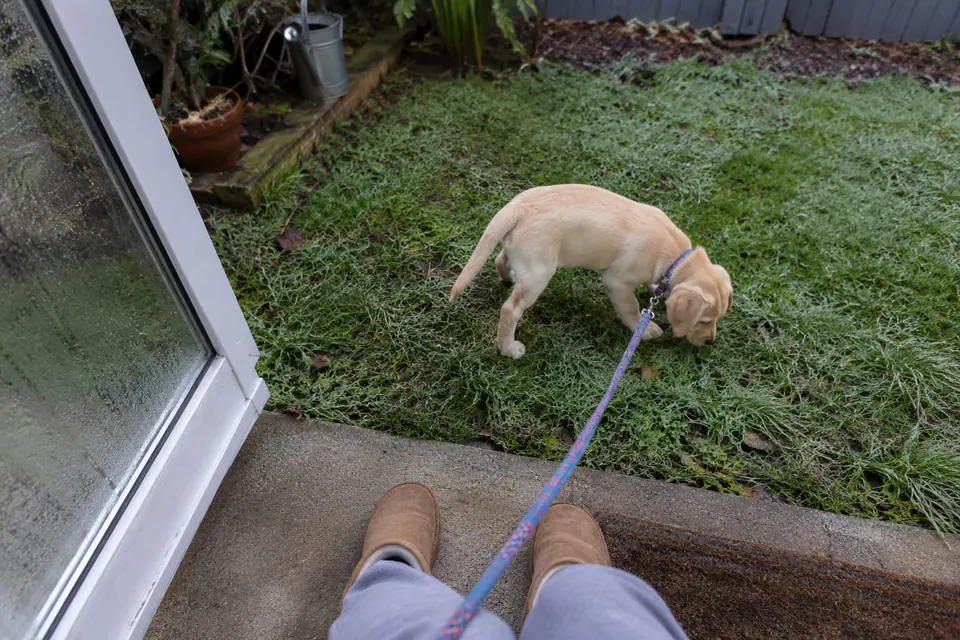
- Go with them. You can't reward what you don't see. Stay with them, and don't just open the door.
- Reward within a second or two. Use a high-value treat and a happy voice, right at the spot.
- Supervise inside. Keep them in the same room as you, or use a lead indoors for a while. Baby gates can help.
- Watch for the signs. Sniffing, circling and heading to a favourite spot all mean it's time to go out.
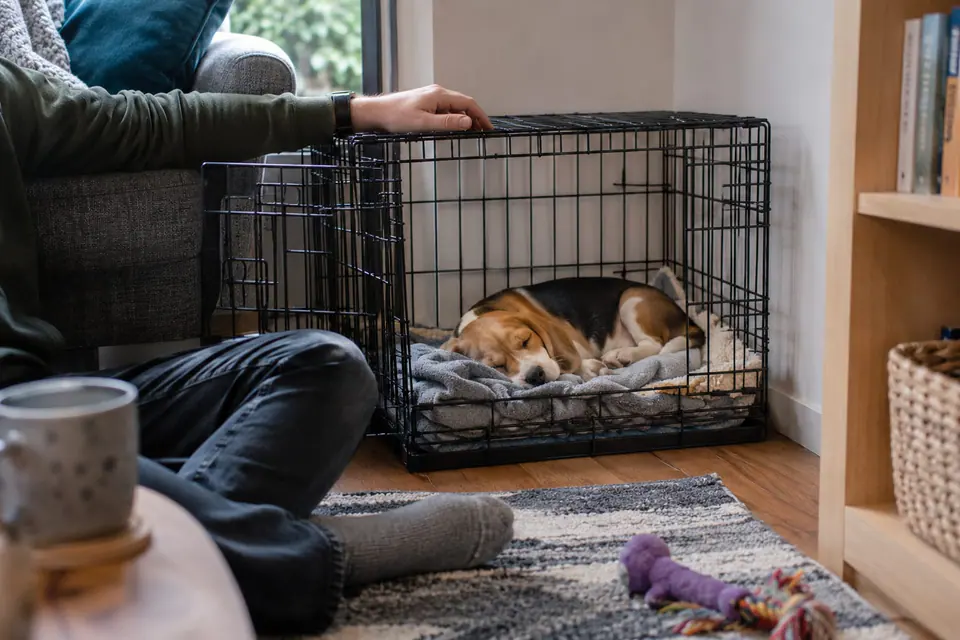
- Limit access when you can't watch. A pen or a crate they already like can help for short periods.
- Interrupt calmly. If you catch them mid-way, calmly take them outside, and reward them if they finish there.
For puppies, our guide on how to toilet train a puppy has a schedule by age.
What should I do about marking?
VCA says marking can be triggered by anxiety or frustration about changes like a new person in the home or a change in routine. Clean marked spots thoroughly, block access to favourite places for now, and supervise closely. Ask your vet about desexing, and a qualified behaviourist if it continues.
Should I punish my dog for peeing inside?
No. The RSPCA says methods like rubbing a dog's nose in it don't teach anything and can harm your relationship. Punished dogs may also learn to hide when they go, making the problem harder to fix. Clean up calmly, and focus on rewarding the right behaviour.
How do I clean dog urine and get rid of the smell?
If your dog can still smell it, they may go back to the same spot.
On carpet or rugs
- Blot, don't rub. Press with paper towel or an old cloth until no more moisture comes up.
- Apply an enzyme cleaner. Follow the label, and use enough to reach the underlay if the urine soaked through. Test a hidden spot first for colourfastness.
- Let it work. Leave it for the time on the label, then blot again.
- Air dry. Open the windows or use a fan.
- Repeat for old stains. They may need more than one treatment.
On timber and tiles
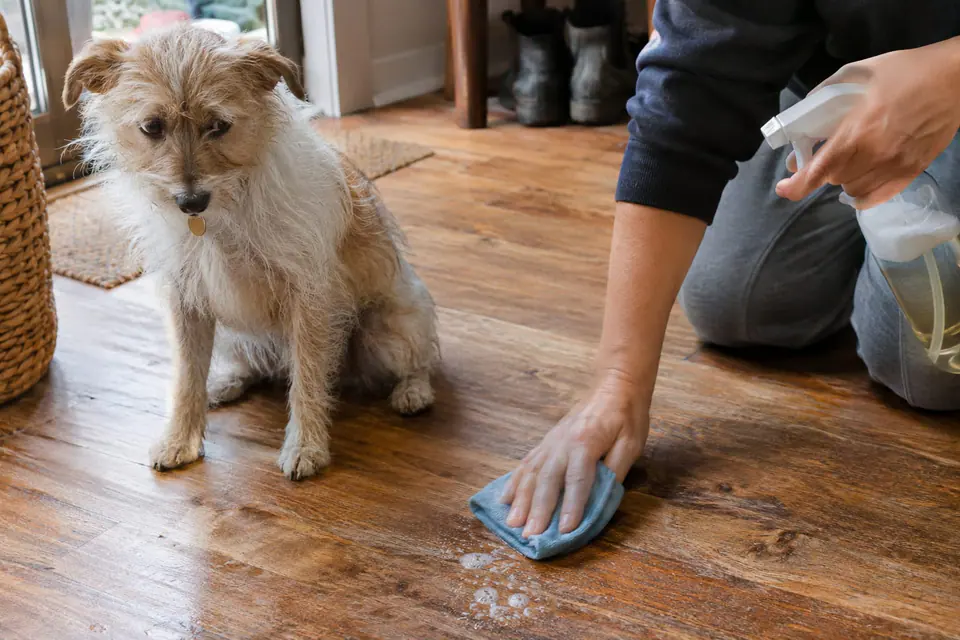
Wipe it up quickly, because urine can damage timber finishes. Clean with a pet-safe enzyme cleaner, following the label, and check it's suitable for your floor. Don't forget to check grout lines.
What to avoid
- Ammonia-based cleaners. They can make the spot smell like a toilet to your dog, as RSPCA Pet Insurance notes.
- Steam cleaning fresh urine. Heat can set the smell. Treat it with an enzyme cleaner first.
- Scented cover-ups. Your dog can still smell what's underneath.
What if my dog can't always get outside?
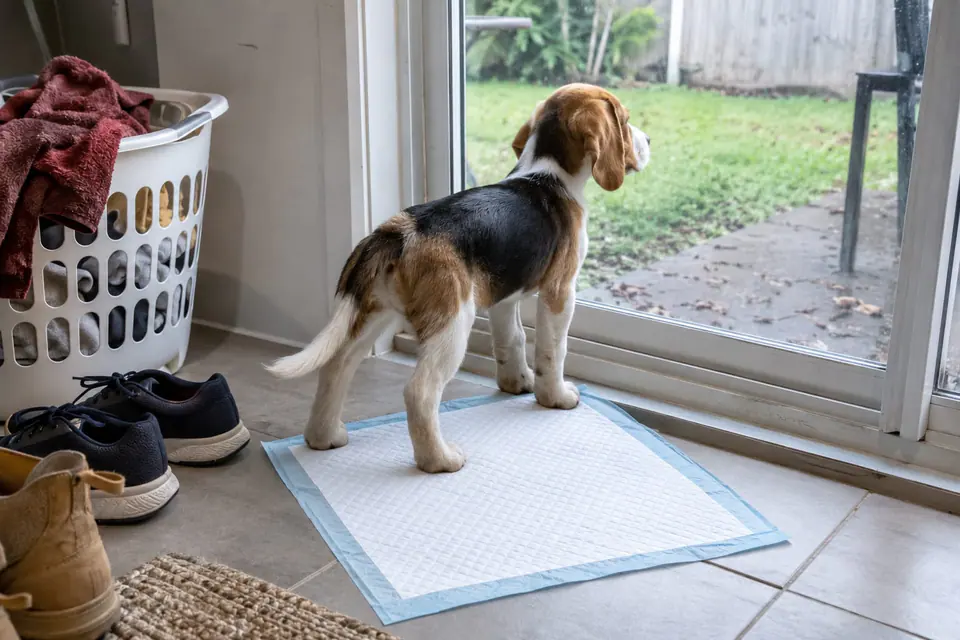
Older dogs, dogs with limited mobility and apartment dogs may need a closer option. See our comparisons of balcony and apartment dog toilets and puppy pads vs grass.
Frequently asked questions
Why is my toilet-trained dog suddenly peeing inside?
Often because of a medical issue like a urinary tract infection, so see your vet first. Stress, changes at home and ageing can also play a part.
How do I stop my dog peeing on the carpet?
Rule out medical causes, clean the spot with an enzyme cleaner, supervise closely, and take your dog out often. Block access to the carpet for now, and reward every success outside.
What smell stops dogs peeing inside?
No smell reliably stops them. It's more useful to remove the urine smell completely with an enzyme cleaner and to retrain your dog.
Do dogs pee inside out of spite?
No. Accidents usually come from health problems, incomplete training, anxiety or marking. Punishment tends to make things worse.