How to toilet train a puppy: a step-by-step guide with a schedule by age
A routine you can start on day one, with a schedule by age, what to do about accidents, and how to manage nights, puppy pads and apartment living.
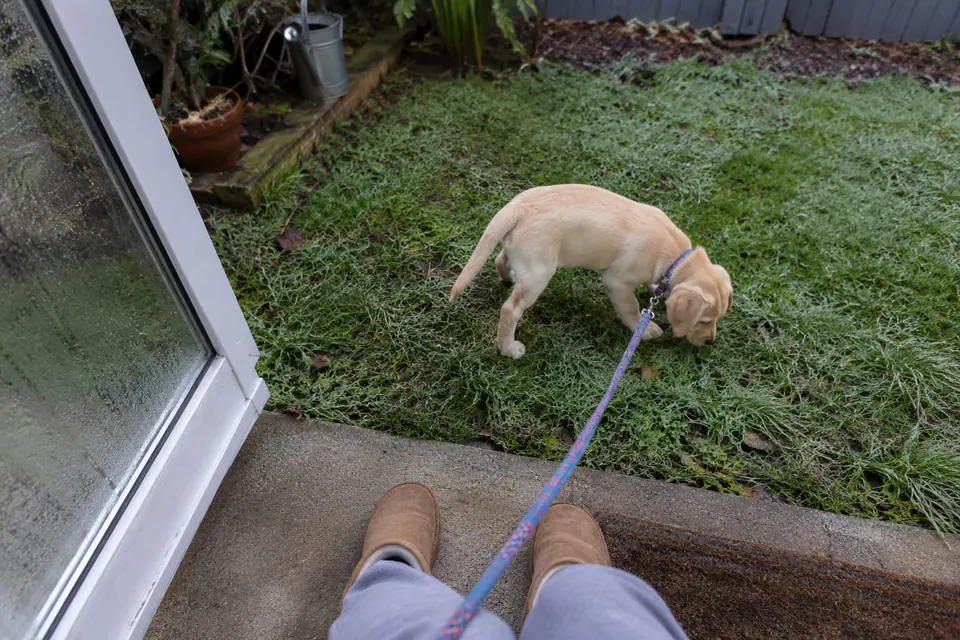
To toilet train a puppy, take them to the same spot every one to two hours, and straight after they wake, eat, drink or play. Reward them within a few seconds of finishing, clean up accidents without fuss, and never punish them. Some puppies pick it up within days, while others take several months.
How to toilet train a puppy, step by step
- Pick one toilet spot. The RSPCA suggests a quiet, private spot, away from busy areas and distractions.
- Take them out on a schedule. Puppies usually need to go every one to two hours. In the early weeks, RSPCA Victoria suggests setting a timer for every hour.
- Go at the moments they're most likely to need it. That means after waking from a nap, after eating or drinking, and after play.
- Keep the trip boring. Pop them on a lead and skip the games. Wait up to five minutes. If nothing happens, head back inside, keep watching, and try again five minutes later.
- Add a cue. Pick a phrase like "go toilet" and say it as they go. In time, the RSPCA Knowledgebase says they can learn to go on cue.
- Reward within a second or two. Use a high-value treat and a happy "good dog" right there at the spot. A reward back inside comes too late for them to make the connection.
- Watch closely between trips. Sniffing the floor, circling, pacing, fidgeting or whining all mean it's time to go now.
- Stretch the gaps slowly. Once it's going well, gradually increase the time between breaks, at a pace that suits your puppy.
Puppy toilet training schedule by age
Use this as a guide to the longest gap to expect, not a target. Vets at VCA suggest a break every two hours at six to eight weeks, then adding about an hour per month of age. The American Kennel Club's rule of thumb is similar, and it notes some puppies need breaks more often.
| Age | Daytime toilet breaks | Longest gap to expect | Overnight |
|---|---|---|---|
| 8 to 10 weeks | Every 1 to 2 hours, plus after sleep, food and play | About 2 hours | Expect to get up for them |
| 3 months | Every 2 hours or so, plus after sleep, food and play | About 3 hours | Often still one trip |
| 4 months | Every 2 to 3 hours | About 4 hours | Many still need a trip |
| 6 months | Every 3 to 4 hours | About 6 hours | Most can sleep through |
Toy breeds and very young puppies often need to go more often than this, so follow your puppy rather than the clock.
A sample day for an 8 to 12 week old puppy
| Time | What happens |
|---|---|
| 6.30 am | Wake up, straight to the toilet spot |
| 7.00 am | Breakfast, then toilet |
| 7.30 am | Play, then toilet, then nap |
| 9.30 am | Wake up, toilet, short training game |
| 11.00 am | Toilet, then nap |
| 12.30 pm | Wake up, toilet, lunch, toilet again |
| 3.00 pm | Wake up, toilet, play, toilet again |
| 5.30 pm | Dinner, then toilet |
| 7.30 pm | Wind down, toilet |
| 10.00 pm | Last toilet trip, then bed |
| Overnight | Quiet toilet trip when they wake and whine |
What should I do when my puppy has an accident?
Stay calm. Accidents are part of learning, and very young puppies don't yet have full bladder control, so some simply can't be avoided.
- If you catch them mid-way: gently interrupt, carry them to the right spot, and reward them if they finish there.
- If you find it later: clean it up without reacting. They won't connect a telling-off to something they did earlier.
- Never punish them. The RSPCA says methods like rubbing a dog's nose in it teach nothing and can damage your relationship. Punished puppies can also start avoiding going in front of you.
- Clean it properly. Use an enzyme-based or other non-ammonia cleaner. Ammonia can smell like urine to a puppy, which makes the spot seem like a toilet.
How do I toilet train a puppy at night?
Take them out last thing at night and first thing in the morning. Young puppies still need overnight breaks, and VCA notes puppies may need them until about five months.
Keep night trips quiet and dull: lead on, toilet spot, a calm reward, then back to bed with no play. Whining overnight can simply mean they need to go. Having their bed or crate close by makes it easier to hear them, and our guide to crate training a puppy covers those first nights.
Should I use puppy pads?
Pads are useful when you can't supervise, or when you have to go out. The RSPCA suggests removing them once your puppy has better bladder control and toilets reliably on cue. Moving from pads to the outdoors does add a training step, and RSPCA Pet Insurance notes a grass or synthetic turf patch can make that switch easier.
How do I toilet train a puppy in an apartment?
The method is the same, but you'll need a closer toilet spot:
- Set up one spot and stick to it. A grass patch or pads in a safe corner of the balcony or laundry both work.
- Use a pen when you're out. For longer absences, a playpen with a toileting area stops accidents spreading through the home.
- Avoid shared grass at first. Don't take an unvaccinated puppy to shared grass used by other dogs. Ask your vet when it's safe.
- Plan the lift or stairs. Young puppies can't hold on for long, so carry them on the way down.
How long does toilet training a puppy take?
It varies. Some puppies build reliable habits within days, while others take several months. RSPCA Victoria treats initial training as complete once your puppy has used the right spot for four weeks, and VCA says most puppies are fully trained by about six months.
Keep rewarding good toileting now and then, even after it seems sorted. If progress stalls, talk to your vet to rule out a medical cause, or find an accredited behaviourist or reward-based trainer. See your vet promptly if a trained dog suddenly starts having accidents, or if they strain or seem uncomfortable.
Frequently asked questions
How often should I take my puppy to the toilet?
Every one to two hours for young puppies, plus straight after they wake, eat, drink or play. Stretch the gaps as they grow.
At what age should a puppy be toilet trained?
VCA says most puppies are fully toilet trained by about six months, but every puppy learns at a different pace. Keep up the routine until they've been reliable for several weeks.
Why does my puppy go straight after coming back inside?
Usually because the toilet trip was too exciting or too short. Choose a quieter spot, skip the play, and wait up to five minutes. Watch them closely when you come back in, and try again a few minutes later.
Should I rub my puppy's nose in an accident?
No. The RSPCA says it doesn't teach anything and can harm your puppy's welfare and your relationship. Clean it up calmly and reward them next time they get it right.