Crate training a puppy: from night one to week four
How to make the crate somewhere your puppy chooses to go, including the first nights, the whining, and how long is too long.
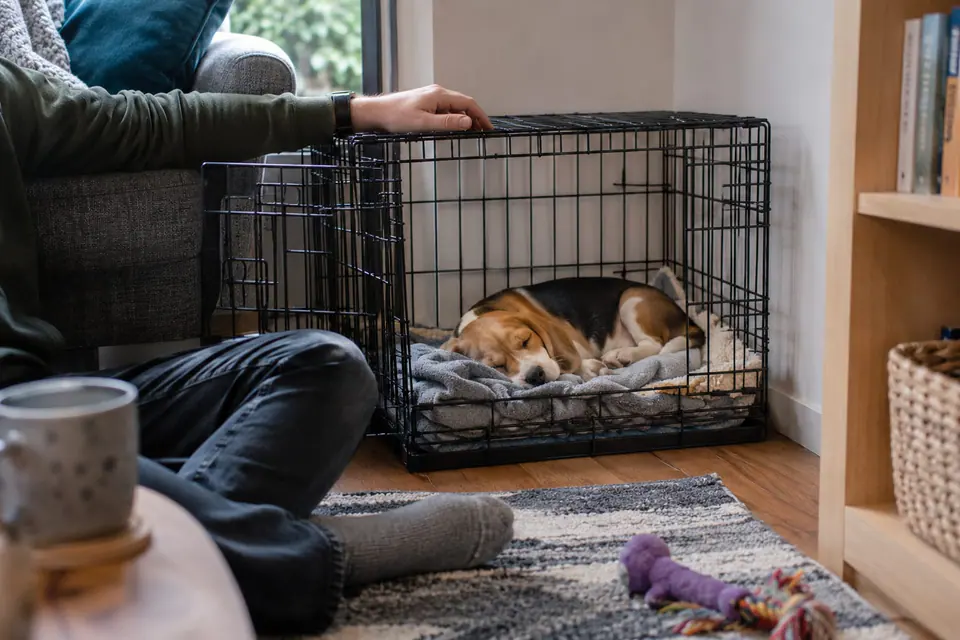
Crate train a puppy by making the crate the best place in the house. Leave the door open, feed meals inside and reward them for settling. Close the door for moments at first and build up over several weeks. Young puppies shouldn't stay in for more than two to three hours without a toilet break.
Is crate training right for your puppy?
A crate can be a safe, quiet den and a real help with toilet training, because dogs don't want to toilet where they sleep. It's for short periods only. RSPCA Victoria warns against crating a dog all day and says a crate never replaces exercise and enrichment. It also strongly recommends working with a reward-based trainer.
If you'd rather not use a crate, a puppy-proof pen does much the same job.
What size crate does my puppy need?
Your puppy should be able to stand up, turn around and lie down comfortably. A crate with lots of spare room leaves space for a toilet corner, so if you buy one to grow into, use a divider for now.
| Crate type | Good for | Keep in mind |
|---|---|---|
| Collapsible wire | Home use, good airflow | Add a blanket for a cosier feel |
| Plastic (airline style) | Travel, dogs who like a den | Less airflow, so watch them on hot days |
| Fabric | Calm dogs on short stays | Avoid long periods unless they're consistently happy inside |
Put the crate somewhere central and familiar, not shut away in a far room. In an Australian summer, keep it out of direct sun and somewhere with good airflow.
How to crate train a puppy, step by step
These steps follow RSPCA Victoria's crate training guide.
- Make it inviting. Add their favourite blanket and leave the door open.
- Let them explore at their own pace. Reward any interest with treats and encouragement, and reward them when they settle inside.
- Feed meals in the crate. Put the bowl inside and use a cue like "bed". Keep the door open for the first few meals.
- Close the door during meals. Once they're happy eating inside, close it briefly, then open it as they finish.
- Add a few minutes after eating. If they whine, wait until they're settled before you reward them or open the door.
- Build to 10 to 15 minutes after a meal. Then start giving a treat and praise as they go in, close the door and sit nearby.
- Move around the house. Carry on with what you're doing, coming back regularly to reward calm behaviour.
- Keep increasing slowly. Be patient, because this can take weeks.
A four-week crate training plan
Treat this as a rough pace rather than a deadline, and stay on a week for longer if your puppy needs it.
| When | Goal | Crate door |
|---|---|---|
| First nights | Feel safe and close to you | Open, with the crate inside a pen beside your bed |
| Week 1 | Love going in: treats, toys, meals inside | Open |
| Week 2 | Happy eating inside and staying a few minutes after | Closed briefly at meals |
| Week 3 | Settled for 10 to 15 minutes, then longer with you nearby | Closed for short, supervised stretches |
| Week 4 | Calm while you potter around the house | Closed for longer, with regular rewards |
What should I do on the first night?
Don't lock them in straight away. RSPCA Victoria advises starting night crating only once your dog is comfortable in the crate with you nearby. Until then, a pen with the crate open inside it, right beside your bed, lets them sleep near you without feeling trapped.
- Toilet first. Take them out right before bed.
- Keep them close. Use a familiar spot where you can hear them.
- Give them something to settle with. A favourite toy or blanket helps.
- Expect to get up. Puppies may need toilet breaks overnight, so keep trips quiet, with no play.
What if my puppy whines in the crate?
In general, wait until they're settled before you reward them, so they don't learn that whining opens the door. Nights are different for young puppies, because whining can mean they need the toilet. Take them out on the lead, offer a calm reward, then put them straight back to bed.
If they seem distressed, RSPCA Victoria suggests covering the crate with a blanket. Leave plenty of airflow, particularly in warm weather. If they stay distressed, slow down and go back a step, or ask a reward-based trainer for help.
How long can a puppy stay in a crate?
RSPCA Victoria says young puppies shouldn't stay in for more than two to three hours without a toilet break. Dogs shouldn't spend most of the day in a crate at any age, because it can affect their muscle development and condition. Plan plenty of time out for play, walks and training.
What should I avoid?
- Using the crate as punishment. It should always be somewhere good.
- Closing the door too early. Rushing is the most common way to create a dog who dislikes the crate.
- Leaving them in all day. It's for short periods, not a substitute for exercise.
- Letting them out mid-whine. Wait for a moment of quiet, unless you think they need the toilet.
How does crate training help with toilet training?
Because puppies avoid toileting where they sleep, the crate helps them learn to hold on for short stretches. Take them straight to their toilet spot every time they come out, and reward them there. Our guide on how to toilet train a puppy has a full schedule by age.
Frequently asked questions
How long does it take to crate train a puppy?
Expect several weeks, and sometimes longer. RSPCA Victoria says to be patient and build up slowly, moving at your puppy's pace.
Should a puppy sleep in a crate on the first night?
Not with the door shut. Start night crating once they're comfortable in the crate with you nearby. On the first nights, keep them close in a pen with the crate open.
Should I cover my puppy's crate?
A blanket can help a distressed dog feel more secure, according to RSPCA Victoria. Leave enough open for good airflow, and take it off if they get warm.
Should I put water in the crate?
Offer water before and after short stays. For anything longer, or on hot days, clip a spill-proof bowl to the crate door so water is always within reach.