Are raised dog bowls good for dogs? What the research says
They can look better and feel more comfortable, but they don’t prevent bloat, and for large breeds the evidence points the other way.
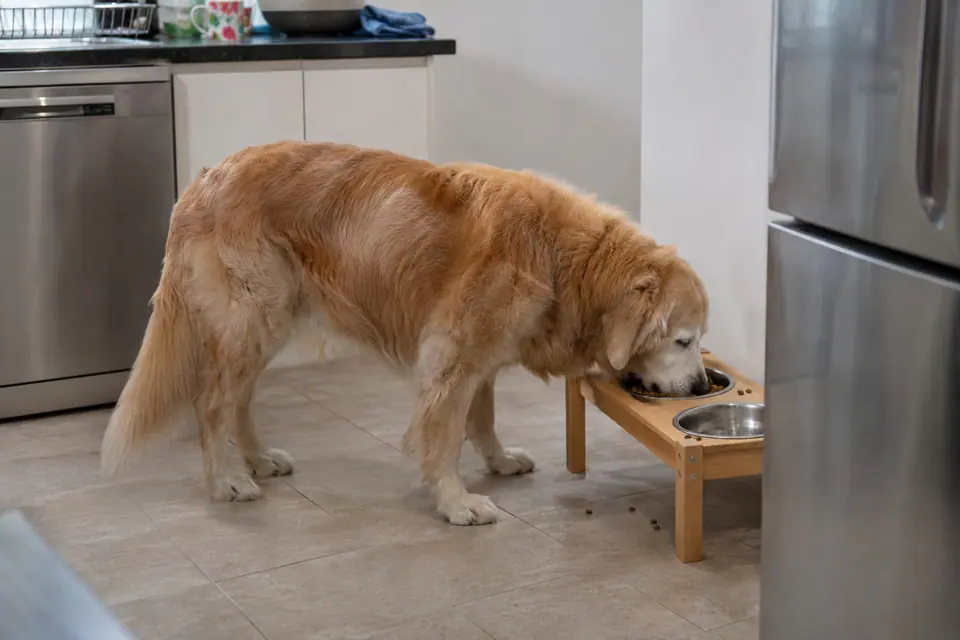
Raised bowls may suit some dogs, but they won't prevent bloat, and one large study linked them to a higher risk in large and giant breeds. If your dog is large or deep-chested, feeding from the floor is the safer default unless your vet advises otherwise. For other dogs, it mostly comes down to comfort and preference.
Do raised bowls cause bloat?
They haven't been proven to cause it, but they certainly haven't been shown to prevent it, despite what older advice claimed.
Bloat, or gastric dilatation-volvulus (GDV), is when the stomach fills with gas and can twist. A 2000 study of 1,637 large and giant breed dogs found that a raised feed bowl was among the factors linked to higher risk, along with older age, a close relative with GDV, and eating fast. Its authors attributed about 20% of cases in large breeds and 52% in giant breeds to raised bowls.
That's one study, and it shows a link rather than proof of cause. A 2017 review of the evidence found the two relevant studies conflict, and neither showed raised feeders lower the risk. It concluded that feeding at-risk dogs from the floor is "the safest option in the absence of further evidence".
Bloat is an emergency. See a vet immediately if your dog is restless or distressed, drooling heavily, retching with nothing coming up, or has a swollen belly or trouble breathing. VCA notes care is needed within minutes to a few hours.
Which dogs might suit a raised bowl?
The main reasons owners choose one are comfort and tidiness, rather than anything proven.
| Your dog | Raised bowl? | Why |
|---|---|---|
| Large or giant, or deep-chested | Talk to your vet first | Linked to higher bloat risk in the main study |
| Close relative has had bloat | Talk to your vet first | Already at higher risk |
| Small or medium, no health issues | Up to you | Mostly preference |
| Older, or with neck, back or joint pain | Ask your vet | May be more comfortable, but your vet can weigh up the risks |
| Trouble swallowing | Ask your vet | Some conditions need specific feeding advice |
What height should a dog bowl be?
Your dog should be able to eat comfortably with a relaxed neck, without crouching low or stretching up. There's no proven ideal height, and the review above found the risk varied with both bowl height and dog size, so it's another reason to ask your vet if your dog is large.
How can I lower the risk of bloat?
Whatever bowl you use, the feeding routine matters. VCA and the 2000 study point to a few practical steps:
- Split the food. Feeding one large meal a day is a listed risk factor, so give two or more smaller meals.
- Slow fast eaters down. Try a slow feeder or a puzzle toy.
- Rest around meals. Avoid hard exercise after a large meal or a big drink.
- Ask about gastropexy for high-risk breeds. This surgery usually prevents the stomach twisting, and some vets recommend it when a high-risk dog is desexed.
Do cats need raised bowls?
Some cats seem to like them, and there's less evidence either way. See our guide to whisker fatigue in cats for what to try.
What about the TOMO bowl and stand?
Our Custom Ceramic Bowl is coming soon as a single bowl or as a two-bowl and stand bundle. If your dog is large, deep-chested or has a family history of bloat, talk to your vet before using any raised stand. The single bowl is an option if you'd rather skip the stand.
Frequently asked questions
Are elevated dog bowls bad for dogs?
Not for every dog. They've been linked to a higher risk of bloat in large and giant breeds, so those dogs are safer eating from the floor unless a vet advises otherwise. For small and medium dogs without health issues, it's largely a matter of preference.
Do raised bowls help with digestion?
There's no good evidence that they do. The claim that they prevent bloat isn't supported by the research.
Do vets recommend raised bowls?
It depends on the dog. A vet may suggest one for a particular medical reason, or advise against it for a large or deep-chested breed. Ask about your own dog.