Whisker fatigue in cats: what it is, and which bowls help
It’s all over the internet, but it hasn’t been proven. Here’s what the research found, and why a wide, shallow bowl is still worth trying.
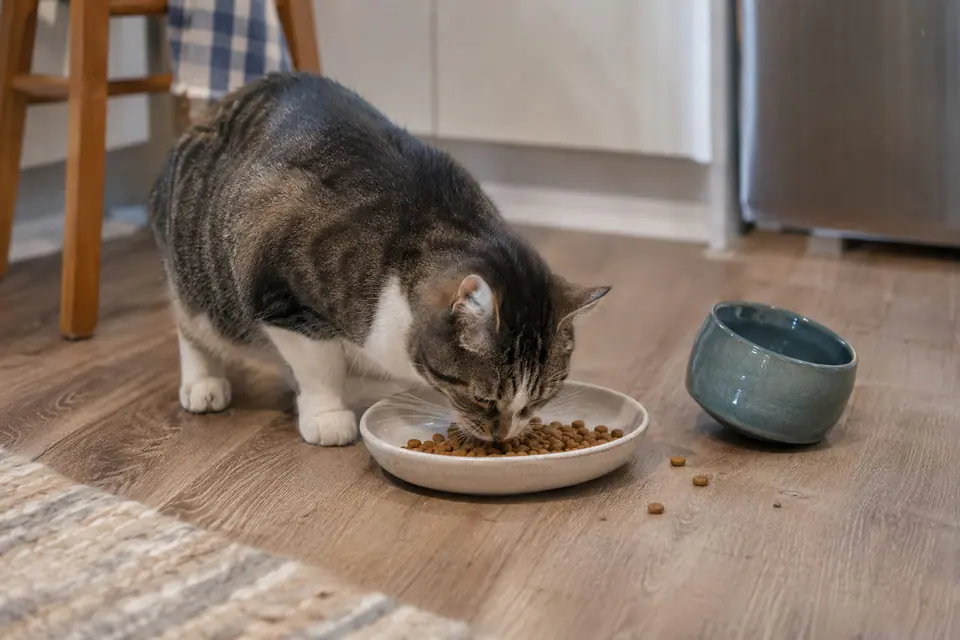
Whisker fatigue is the idea that a cat's sensitive whiskers become overstimulated by brushing against deep bowls, making meals uncomfortable. It hasn't been proven. Trying a wide, shallow dish is still cheap and harmless, and many cats seem to prefer one. If your cat is eating less or has changed their habits, see a vet first.
Is whisker fatigue real?
Nobody knows for sure. Tufts University's veterinary nutrition team says it has not been proven that this condition exists, and that vets, behaviourists and owners disagree about it.
The article describes a home study of 38 cats that compared their usual dish with a whisker-friendly one:
- They ate about the same amount from both.
- They spent about the same time at each dish.
- They dropped or pushed out about the same number of kibbles.
- Given a side-by-side choice, 63% picked the whisker-friendly dish.
So it's a mild preference, not a sign of a widespread problem. Cats are individuals, and some may care much more than others.
What are the signs of whisker fatigue?
These are the behaviours most often blamed on it. None of them proves it, and all of them can have other causes.
- Scooping food out of the bowl with a paw and eating it off the floor
- Eating only from the middle of the bowl, then leaving the rest
- Hovering around the bowl or seeming hungry while food is still there
- Backing away from the bowl during a meal
When should I see the vet instead?
Don't put a change in eating down to the bowl until you've ruled out health problems. Dental pain and other illnesses can also make a cat fussy at mealtimes. Book a vet visit if your cat is eating less, losing weight, drooling, dropping food or hiding. A cat who stops eating altogether needs to be seen promptly.
Which bowl should I try?
Most of these are easy to test with something you already own, such as a saucer or side plate.
| Option | Why try it | Good to know |
|---|---|---|
| Wide, shallow dish | Gives whiskers more room | Cats Protection says cats generally prefer this shape |
| Flat plate or saucer | The cheapest test | Wet food can slide off, so check it suits your cat |
| Heavy ceramic dish | Stays put when nudged | Replace it if it chips |
| Stainless steel dish | Tough and easy to wash | Lighter ones can slide around |
| Raised or tilted dish | Some cats seem to like the angle | Little evidence either way, so watch your cat's reaction |
Give a new dish a week or so, and keep the old one out at first so your cat can choose.
What else helps at mealtimes?
- Move the water. Cats Protection suggests keeping food and water apart, and both away from the litter tray. Our guide on where to put your pet's bowls has more.
- Find a quiet spot. Avoid busy hallways, cat flaps and glass doors.
- Keep it clean. Wash bowls often, as old food smells can put a fussy cat off. See how often to wash pet bowls.
- Think about the material. Some cats seem to dislike plastic. Our bowl material guide compares the options.
Our Custom Ceramic Bowl is coming soon with your cat's name and artwork, and you can join the launch list now.
Frequently asked questions
How do I know if my cat has whisker fatigue?
There's no test for it. Pawing food out of the bowl or eating only from the middle are the signs people mention, but they aren't proof. Rule out health problems with your vet, then try a wide, shallow dish and see what changes.
Do cats really need special whisker bowls?
Probably not specially branded ones. In the study Tufts describes, cats ate the same amount from both dishes, though 63% chose the whisker-friendly one. A wide, shallow dish you already own is enough to test the idea.
Should cat bowls be shallow?
Many cats seem to prefer them, and Cats Protection says wide, shallow bowls are generally favoured. It's an easy change to try.