Where to put your pet’s food and water bowls: feeding station ideas
A little thought about placement means calmer meals and drier floors. Here’s where bowls work best, plus ideas for a feeding spot you won’t mind looking at.
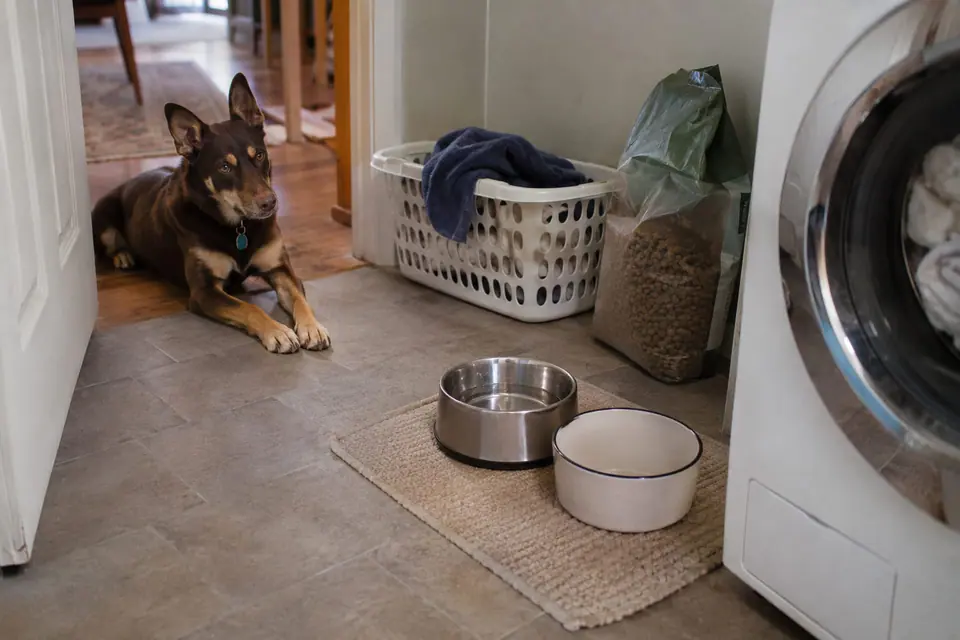
Put your pet's bowls in a quiet, easy-to-reach spot on a floor that's simple to clean, away from busy doorways and the litter tray. Cats do best with food and water kept apart. Once you've found a good spot, leave it there, because pets like a routine.
Where should I put my dog's bowls?
Choose somewhere your dog can eat without being bumped or watched.
- Pick a quiet corner. A laundry, the end of a kitchen bench or a calm corner of the living area all work. Avoid hallways and the path to the back door.
- Choose a forgiving floor. Tiles cope with splashes better than floorboards or carpet. On timber or carpet, put a mat underneath.
- Keep water easy to find. Add a second bowl outside in summer, in the shade. The RSPCA also suggests a bowl that a puppy can't chew or knock over.
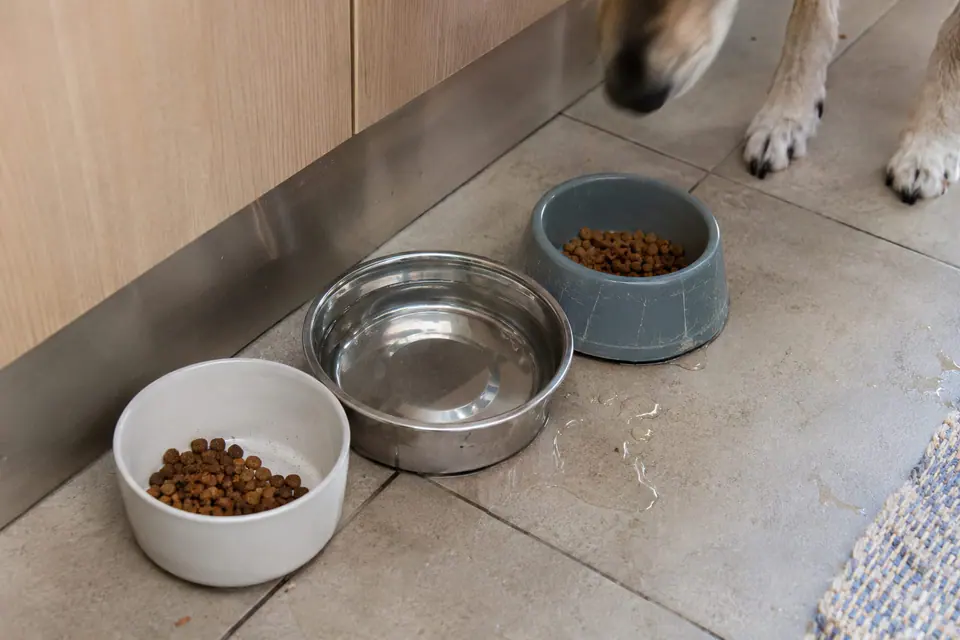
- Give multi-dog homes some space. Feed dogs apart if either guards food or eats the other's dinner.
- Keep it out of the sun. Bowls by a sunny door will warm up quickly in an Australian summer.
Where should I put my cat's bowls?
Cats are fussier about this, and the rules are a little different.
- Keep food and water apart. Cats Protection advises placing them away from each other, and away from the litter tray.
- Pick a quiet spot. Stay away from cat flaps, glass doors and busy hallways.
- Move bowls off the wall. Cats are vulnerable with their heads down, so some like a clear view of the room while they eat.
- Offer more than one station. For kittens, the RSPCA suggests two feeding stations and two water bowls in separate locations.
What about homes with cats and dogs?
Feed them apart. Cats often eat more comfortably up high, on a bench or a shelf the dog can't reach. Pick up leftover food after meals, so the dog doesn't clean out the cat's bowl. Keep the litter tray somewhere the dog can't reach it as well.
Feeding station ideas for small homes
You don't need a renovation to create a good feeding spot. Most of these take a few minutes.
- The laundry nook: a mat on the floor, with a shelf above for food and treats.
- The bench-end corner: tuck bowls into the gap at the end of a kitchen run, out of the walkway.
- The apartment corner: a mat under a console or side table gives the spot a defined edge, with a basket for leads and toys.
- The drawer station: if you're renovating, a low pull-out or an open toe-kick can hold bowls out of the way.
- The raised perch: a shelf or window ledge for cats, away from the dog.
- The airtight jar: food stored in a good-looking jar can stay out on the bench. Use a clean scoop rather than the bowl.
Thinking of a stand for a large dog? Read are raised dog bowls good for dogs first.
What should go under the bowls?
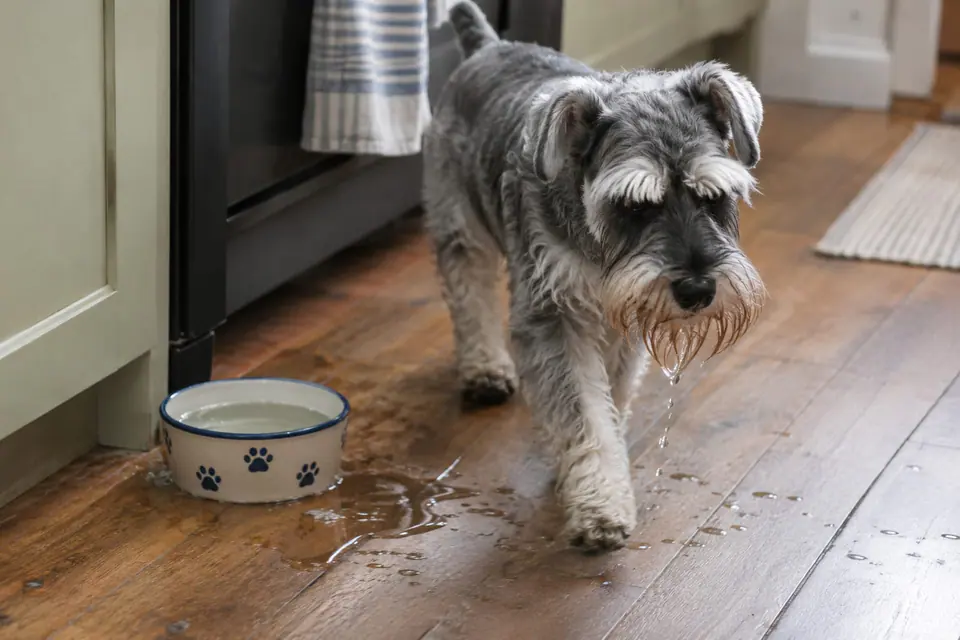
A mat does the most for the least effort. It defines the spot, catches splashes and stops bowls skating around. Our Custom Feeding Mat is highly absorbent and non-slip, and at 55 × 30 cm it fits food and water bowls side by side. It's personalised with your pet's name in beige, blue or pink, so it looks like it belongs in the room. If your dog treats the water bowl as a splash zone, see how to stop your dog spilling water.
For cats, you may want a separate mat for each bowl, so that food and water stay apart.
Frequently asked questions
Should a dog's food and water bowls be together?
They can be. Dogs are generally fine with both in one spot, though it's worth adding a second water bowl elsewhere in the house, especially in summer.
Should a cat's food and water be next to each other?
Ideally, no. Cats Protection advises keeping them apart, and both away from the litter tray.
Is it okay to keep pet bowls in the kitchen?
Yes, as long as the spot is out of the main walkway and the bowls are washed regularly. Keep pet bowls and scoops separate from your own dishes where you can.