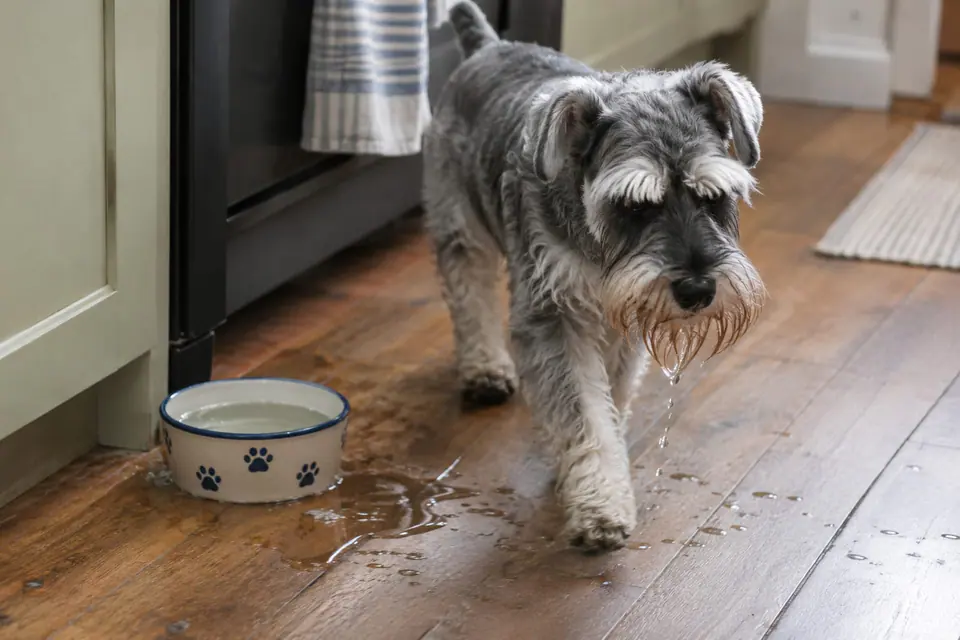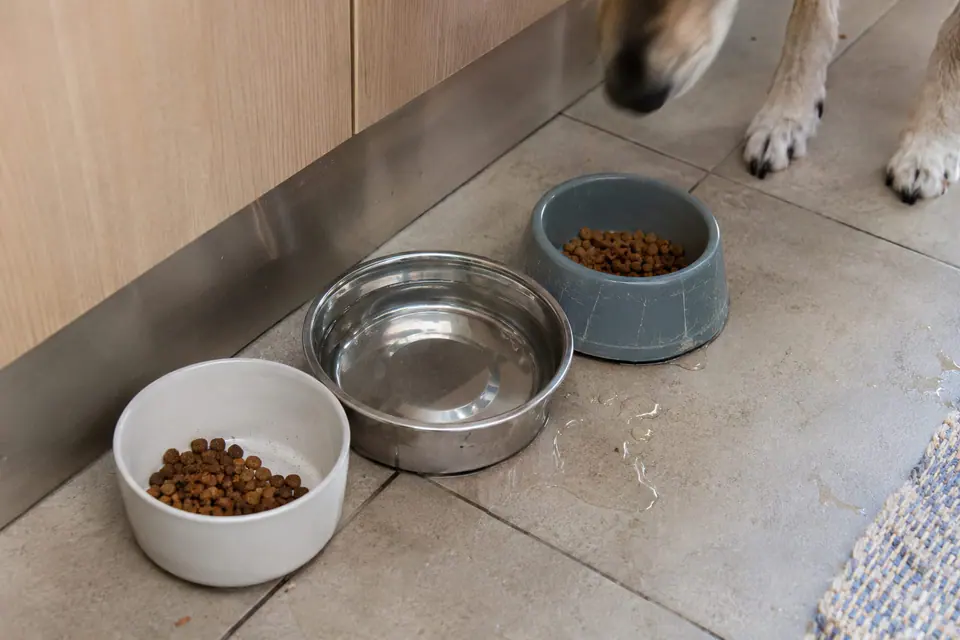
Why does my dog push their food bowl around?
It’s usually harmless and often quite funny, unless it’s your floorboards. Here’s why dogs do it, and how to keep dinner in one place.
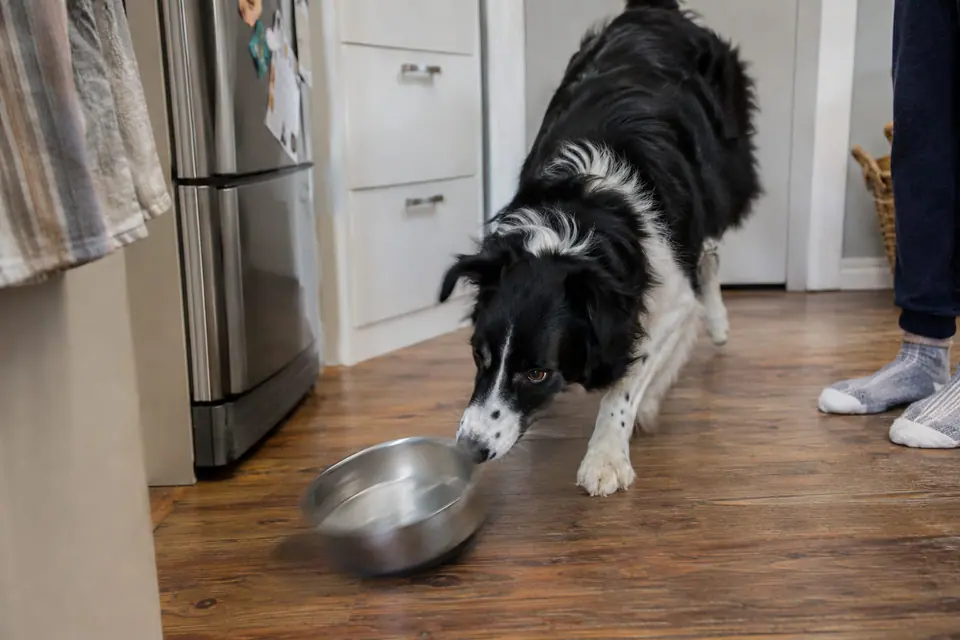
Dogs usually push their food bowl because of an instinct to bury or stash food, because the bowl slides or clinks, or because they've learned it gets your attention. It's normally harmless. A heavier bowl on a non-slip mat fixes most cases, but see your vet if your dog is also eating less or seems to find eating difficult.
Why does my dog push their food bowl?
They're trying to bury it
This is the explanation you'll hear most often. Wild dogs and wolves bury food to save it for later, and that nosing motion may be the same instinct showing up on your kitchen floor. Scientific American and Vetstreet both explore this idea. It's a good theory, though nobody has proven it for pet dogs.
The bowl moves easily
A light bowl on a smooth floor slides as soon as a dog starts eating. Some dogs chase it around the room, and some seem to enjoy it.
The bowl is uncomfortable
A bowl that's too small or too deep can press on their cheeks or chin, so they may shift it to reach the food. Flat-faced breeds and dogs with long ears can find some bowls awkward.
The bowl makes a noise
Metal bowls can ding when an ID tag hits the side. Some dogs dislike the sound and may push the bowl away, or take food elsewhere to eat.
They've learned it works
If nudging the bowl brings you running, or earns a top-up, your dog may repeat it. A clever dog works this out quickly.
They're just playing
Younger dogs and bored dogs may treat the bowl as a toy, particularly when they aren't very hungry.
How do I stop my dog pushing their bowl?
- Use a heavier bowl. Ceramic or a weighted steel bowl is harder to shift. Our bowl material guide compares the options.
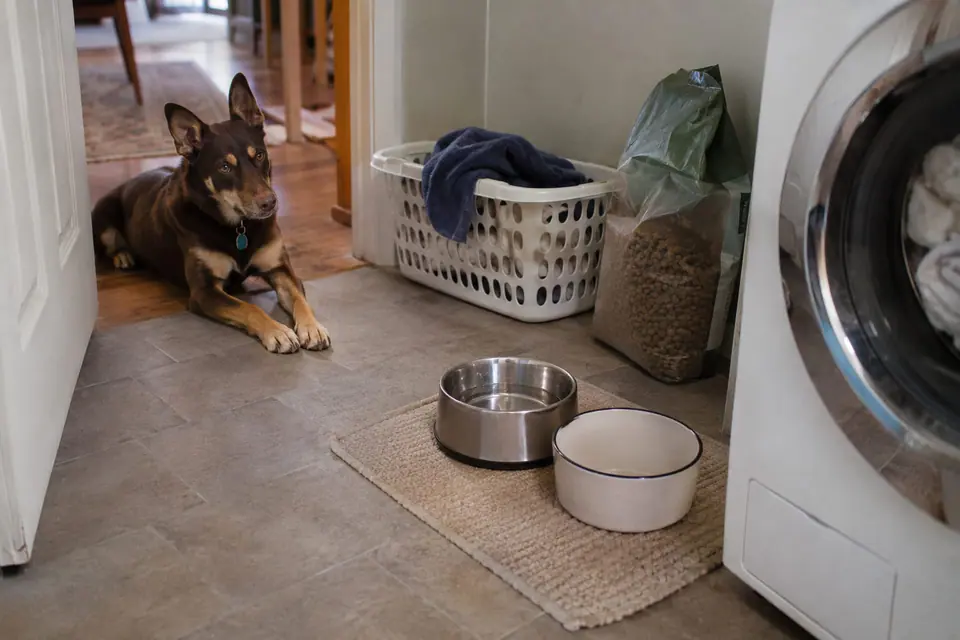
- Add a non-slip mat. A mat stops the bowl skating and catches whatever gets flicked out. Our Custom Feeding Mat is highly absorbent and non-slip, and it's personalised with their name.
- Try a different size or shape. A wider, shallower bowl gives their face more room.
- Quieten the clinks. Switch from metal to ceramic, or take the tag off at mealtimes if it hits the rim.
- Try a corner. With two walls behind it, a bowl has nowhere to go. See where to put your pet's bowls.
- Don't reward it. Wait until they've stopped before you top up the bowl or give them attention.
- Give their brain a job. A puzzle feeder or scatter feeding suits dogs who want to work for food.
- Set meal times. Lift the bowl after about 20 minutes, so it doesn't become a toy between meals.
When should I see the vet?
Most bowl pushing is nothing to worry about. Book a vet visit if it comes with:
- Eating less, or walking away from food they used to love
- Dropping food, chewing on one side or pawing at their mouth
- Drooling more than usual, or bad breath
- Weight loss, vomiting or low energy
- A sudden change in behaviour, especially in an older dog
Dental pain can make a dog nose at food without eating much, so it's worth checking.
Frequently asked questions
Why does my dog nudge their bowl with their nose?
Most often it's an instinct to bury or stash food, or a habit that's earned attention. It can also mean the bowl slides, clinks or sits uncomfortably against their face.
Is it bad if my dog pushes their food bowl?
Usually not. It's only worth a vet check if they're also eating less, seem uncomfortable, or the behaviour starts suddenly.
Why does my dog take food out of the bowl to eat it?
Some dogs like to carry food away to eat it elsewhere, while others may dislike the bowl's noise or feel. Try a quiet ceramic bowl in a calm spot, away from other pets.